
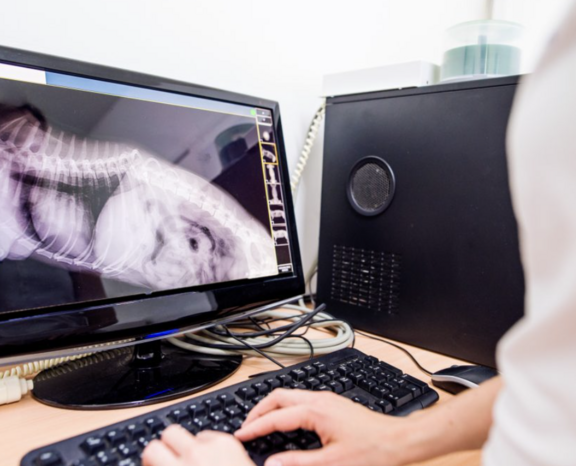
Every veterinarian is trained to interpret diagnostic images. But board-certified veterinary radiologists are trained to see what others may not.
Teleradiology Diaries
By Nicoletta Fantaconi
Every veterinarian is trained to interpret diagnostic images. But board-certified veterinary radiologists are trained to see what others may not.
The difference isn’t competence. It’s specialisation.
General practice veterinarians provide comprehensive medical care for animals, including preventive healthcare, diagnosis and treatment of illness and injury, routine and advanced procedures, client communication, and the coordination of ongoing patient care.
Diagnostic imaging is just one component of the many demands they navigate during their daily work.
Specialised Training in Diagnostic Imaging
Veterinary radiologists complete an additional three to four years of specialised residency training focused entirely on diagnostic imaging.
Throughout this period, they interpret tens of thousands of radiographs, ultrasound examinations, CT scans, and MRI studies before successfully completing rigorous board certification examinations.
While interpretations often coincide in straightforward cases, the depth of a radiologist’s training becomes particularly valuable in more complex or subtle presentations.
Specialist Expertise in the Grey Zones
The real value of specialist review often appears in the grey zones:
- Early metastatic disease Subtle changes may indicate disease before more obvious clinical signs develop.
- Subtle pulmonary changes Minor variations in the lungs may be difficult to identify or interpret without specialist experience.
- Small linear foreign bodies Fine or partially obscured foreign material can easily be missed in complex anatomical regions.
- Mild musculoskeletal abnormalities Early or low-grade orthopaedic changes may require detailed imaging analysis.
- Incidental findings Unexpected findings may significantly alter the wider clinical picture and treatment plan.
From Imaging Findings to Clinical Decisions
Radiologists do not simply describe abnormalities. They create a diagnostic gamut within the context of the clinical presentation and prioritise the most likely differential diagnoses.
Their expertise extends to advanced imaging modalities such as CT and MRI, translating imaging findings into actionable information that supports clinical decision-making.
Why Specialist Interpretation Matters
Diagnostic uncertainty can contribute to delays in care, additional testing, repeat image reviews, and missed opportunities for earlier intervention.
The goal is to give every patient the benefit of the best possible interpretation—without distance, geography, or availability becoming barriers to expertise.
How Teleradiology Supports Veterinarians
At Veheri, we see teleradiology as a way to address these challenges. It does not replace the veterinarian; it complements their expertise by providing access to specialist interpretation when it is most valuable.
Teleradiology allows veterinary practices to access board-certified expertise regardless of their location, internal staffing, or immediate specialist availability.
The goal isn’t to prove who is right.
The goal is to combine clinical knowledge, specialist experience, and diagnostic imaging expertise to reach the most accurate and useful interpretation for every patient.
Start today Book your demo
Smarter Teleradiology. Faster Diagnosis. Better Results.