
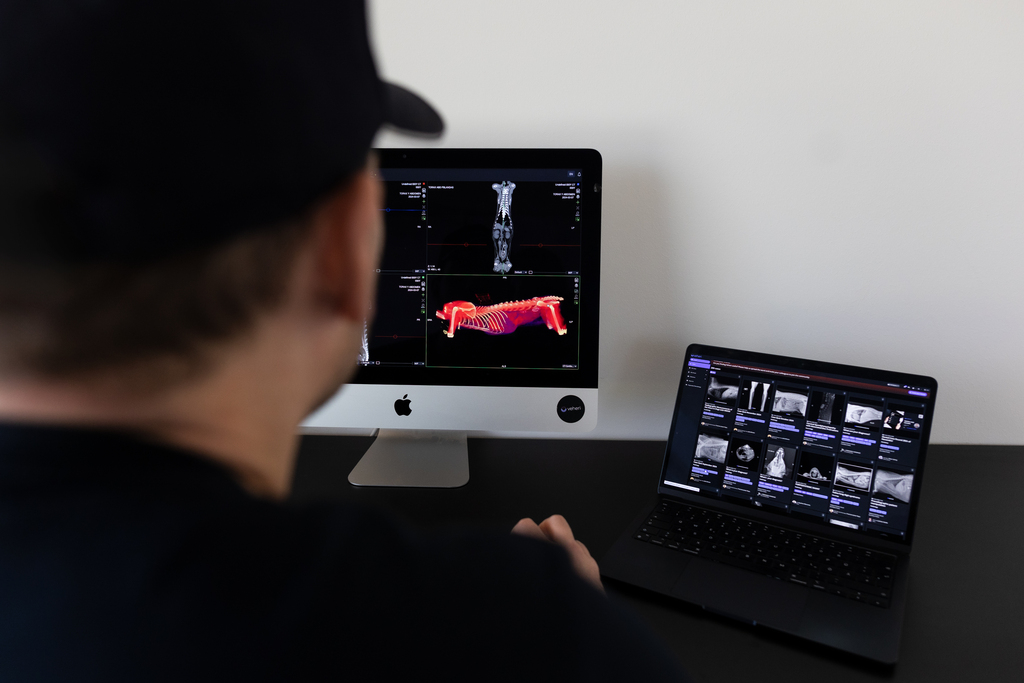
Veterinary teleradiology is a specialized service that enables veterinary practices to electronically transmit diagnostic images—such as X-rays, CT scans, MRIs, and ultrasounds—to board-certified veterinary radiologists for remote interpretation and consultation. This technology bridges the gap between general practitioners and imaging specialists, delivering faster, more accurate diagnoses regardless of geographic location. For veterinary practices seeking to enhance diagnostic capabilities without the overhead of in-house radiology specialists, teleradiology offers an efficient, cost-effective solution that directly improves patient outcomes.
The demand for veterinary teleradiology has surged in recent years as practices recognize the value of specialist expertise in complex cases. Whether you’re a rural clinic with limited access to specialists or a busy urban practice managing high caseloads, understanding how teleradiology works and its potential benefits can transform your diagnostic capabilities and elevate the quality of care you provide.
What Is Veterinary Teleradiology?
Veterinary teleradiology represents a specialized branch of veterinary telemedicine focused specifically on the remote interpretation of diagnostic imaging. The process involves digitally capturing medical images using modern imaging equipment, securely transmitting these images through DICOM-compliant platforms, and receiving detailed diagnostic reports from board-certified veterinary radiologists. Unlike general telemedicine consultations, teleradiology specifically addresses the interpretation of complex imaging studies that require specialized training and expertise.
This service has become increasingly vital as veterinary medicine advances and imaging technology becomes more sophisticated. Many general practitioners excel at capturing quality images but may lack the specialized training to interpret subtle abnormalities or complex pathology that radiologists spend years mastering. According to research published in Veterinary Evidence, teleradiology allows veterinarians to send images to a radiologist for interpretation and reporting, including findings, potential diagnoses, and treatment options, effectively elevating practice quality and improving efficiency.
Also Read: Veheri - Advanced Veterinary Diagnostics & Collaboration
How Veterinary Teleradiology Works: The Complete Process
Understanding the teleradiology workflow helps veterinary practices integrate this service seamlessly into their diagnostic protocols. The process typically unfolds in six distinct stages, each critical to ensuring accurate diagnoses and optimal patient care.
Image Acquisition and Digitization
The teleradiology process begins at your veterinary practice with the acquisition of diagnostic images using digital radiographic equipment. Modern veterinary practices typically use digital X-ray systems, CT scanners, MRI machines, or ultrasound equipment that produce images in DICOM (Digital Imaging and Communications in Medicine) format—the universal standard for medical imaging.
For practices still using traditional film-based radiography, images must first be digitized using specialized scanners before transmission. However, most contemporary veterinary facilities have transitioned to fully digital systems, which streamline the entire process and eliminate this additional step.
Secure Image Transmission
Once images are captured, they’re securely transmitted to the teleradiology service provider through encrypted internet connections. The images are submitted through web-based programs that interface with the imaging equipment’s database, allowing seamless upload of selected DICOM images along with relevant patient history and clinical information.
Security is paramount during transmission. Reputable teleradiology services employ robust data encryption and secure access controls to protect sensitive patient information throughout the process. Collective Minds Health emphasizes that practices need secure network connectivity and DICOM-compliant systems to ensure quality and security.
Clinical Information Submission
Alongside the images, referring veterinarians provide comprehensive clinical context including the patient’s signalment (species, breed, age, sex), presenting complaint, relevant medical history, physical examination findings, and preliminary differential diagnoses. This contextual information is crucial—it allows the radiologist to interpret images within the full clinical picture rather than in isolation.
The quality and completeness of this clinical information directly impacts the value of the radiologist’s interpretation. Detailed case histories enable radiologists to focus on specific areas of concern and provide more targeted recommendations.
Radiologist Review and Interpretation
Upon receiving the case, a board-certified veterinary radiologist conducts a thorough review of all submitted images. The radiologist evaluates images systematically, noting any abnormalities and considering the patient’s history and clinical condition to provide differential diagnoses and recommendations for further diagnostic tests.
This expert interpretation leverages years of specialized training and experience. Board-certified veterinary radiologists have completed extensive residency programs and passed rigorous examinations, giving them unparalleled expertise in identifying subtle imaging findings that might be overlooked by general practitioners.
Also Read: How Computed Tomography Improves Veterinary Diagnostics and Treatment
Comprehensive Report Generation
The radiologist compiles findings into a detailed written report that typically includes a description of the imaging technique used, systematic evaluation of anatomical structures, identification of abnormalities, a list of differential diagnoses ranked by likelihood, and specific recommendations for additional diagnostics or treatment approaches.
Many reports also include annotated images with arrows or markers highlighting key findings, making it easier for referring veterinarians to visualize and understand the radiologist’s observations. These visual aids prove invaluable when communicating findings to pet owners.
Report Delivery and Follow-Up
The completed report is delivered electronically to the referring veterinarian, typically within hours for routine cases or even faster for STAT (urgent) submissions. According to Veheri, their service provides fast and accurate diagnostic reports with standard reports delivered in hours and STAT reports in less than an hour, enabling rapid clinical decision-making in critical cases.
Following report delivery, many teleradiology services offer direct communication between the referring veterinarian and radiologist for case discussion, clarification of findings, or consultation on treatment planning. This collaborative approach enhances learning opportunities and ensures optimal patient care.
Benefits of Veterinary Teleradiology for Modern Practices
The adoption of teleradiology services delivers multifaceted benefits that extend across clinical, operational, and financial dimensions of veterinary practice. Understanding these advantages helps practices make informed decisions about integrating teleradiology into their diagnostic workflows.
Enhanced Diagnostic Accuracy and Confidence
Access to board-certified veterinary radiologists significantly improves diagnostic accuracy. Research highlighted in Veterinary Evidence demonstrates that studies show no statistical differences in diagnostic accuracy between using smartphones and standard computer workstations for diagnosing mechanical obstructions in the small intestine of dogs and cats, with accuracy being more dependent on the radiologist’s experience than the viewing platform.
For general practitioners, having a specialist review complex cases reduces the risk of misdiagnosis and provides confidence in treatment planning. This is particularly valuable for subtle findings, rare conditions, or cases where imaging findings don’t clearly correlate with clinical signs.
Rapid Turnaround Times for Critical Cases
Speed matters in veterinary medicine, especially for emergency and critical care situations. Teleradiology services prioritize urgent cases, with many providers offering STAT interpretations delivered within 1-2 hours. This rapid turnaround enables veterinarians to make swift, informed decisions about treatment, surgical intervention, or referral to specialty centers.
Even for routine cases, receiving expert interpretations within the same day accelerates the diagnostic process, reduces patient stress from prolonged hospitalization, and improves client satisfaction through faster answers and treatment initiation.
Cost-Effectiveness and Resource Optimization
Maintaining an in-house veterinary radiologist represents a significant financial investment that’s impractical for most practices. Teleradiology provides access to specialist expertise on a per-case basis, making advanced diagnostic capabilities accessible to practices of all sizes without long-term financial commitments.
This pay-per-service model allows practices to optimize their budgets by paying for radiology services only when needed. The cost savings can be redirected toward other practice improvements or equipment upgrades, enhancing overall practice capabilities.
Improved Patient Outcomes and Care Quality
Ultimately, the most important benefit of teleradiology is improved patient care. Faster, more accurate diagnoses lead to more appropriate treatment plans, better outcomes, and enhanced quality of life for animal patients. Early detection of conditions through expert image interpretation can be life-saving, particularly for cancers, internal injuries, or progressive diseases.
The ability to monitor treatment response through serial imaging interpreted by the same radiologist also provides valuable continuity of care, allowing for more nuanced assessment of disease progression or treatment efficacy.
Access to Specialists Regardless of Location
Geographic barriers no longer limit access to specialized expertise. Rural and remote veterinary practices can provide the same level of diagnostic sophistication as urban specialty centers by leveraging teleradiology services. This democratization of specialist access benefits both veterinarians and the communities they serve.
Even practices located near specialty centers benefit from teleradiology for after-hours consultations, overflow capacity during busy periods, or second opinions on challenging cases. Veheri notes that teleradiology enables veterinary practices to send medical images to specialists in real-time, reducing the need for in-house radiologists.
Professional Development and Continuing Education
Teleradiology serves as an ongoing educational resource for veterinary professionals. By reviewing radiologist reports and comparing expert interpretations with their own preliminary assessments, veterinarians continuously refine their imaging skills and expand their diagnostic knowledge.
Many practitioners report that regular use of teleradiology services has significantly improved their ability to recognize imaging abnormalities and understand the nuances of different imaging modalities. This educational benefit compounds over time, enhancing the overall diagnostic capabilities of the entire practice team.
Enhanced Practice Efficiency and Workflow
Integrating teleradiology into practice workflows streamlines operations and improves efficiency. Rather than spending extensive time attempting to interpret complex images, veterinarians can focus on other critical aspects of patient care, client communication, and practice management. This optimization of professional time reduces stress and burnout while increasing overall practice productivity.
Faster case turnover enabled by rapid imaging interpretations also allows practices to see more patients, generating additional revenue while maintaining high standards of care.
Veterinary Teleradiology Across Different Imaging Modalities
Teleradiology services support interpretation of virtually all veterinary imaging modalities, each serving specific diagnostic purposes and clinical scenarios. Understanding when and how to utilize teleradiology for different imaging types maximizes its clinical value.
Radiography (X-rays)
Traditional radiography remains the most commonly submitted imaging modality for teleradiology interpretation. X-rays are invaluable for diagnosing fractures, dislocations, joint diseases, thoracic conditions (pneumonia, heart disease, lung masses), abdominal abnormalities (foreign bodies, organ enlargement, masses), and dental pathology.
Board-certified radiologists excel at identifying subtle radiographic changes that may indicate early disease, such as mild cardiomegaly, early osteoarthritis, or small pulmonary nodules. Their systematic approach to radiograph interpretation ensures no abnormalities are overlooked. According to PostDICOM, X-rays are used for diagnosing various conditions, including fractures, dislocations, and internal organ abnormalities.
Computed Tomography (CT)
CT scans provide cross-sectional imaging with superior detail compared to conventional radiography, making them ideal for complex cases. PostDICOM notes that CT scans are helpful in evaluating complex cases such as tumors, spinal cord injuries, and internal bleeding.
The three-dimensional nature of CT imaging and the large number of images generated per study make specialist interpretation especially valuable. Radiologists can create multiplanar reconstructions and 3D renderings that enhance visualization of complex anatomy and pathology.
Also Read: How Computed Tomography Improves Veterinary Diagnostics and Treatment
For region-specific CT, see Veheri’s imaging guides to CT of the canine nasal cavity and CT of the feline middle ear.
Magnetic Resonance Imaging (MRI)
MRI excels at soft tissue imaging and is the gold standard for neurological diagnostics. Teleradiology interpretation of MRI studies is crucial for diagnosing brain tumors, spinal cord diseases (intervertebral disc disease, tumors, inflammation), joint pathology (ligament tears, cartilage damage), and soft tissue masses.
The complexity of MRI sequences and the specialized knowledge required to interpret different pulse sequences make radiologist consultation essential for maximizing the diagnostic value of these expensive studies. PostDICOM emphasizes that MRI scans are particularly helpful for diagnosing neurological conditions and soft tissue injuries.
For seizure work-ups, see Veheri’s guide to brain MRI for dogs with seizures.
Ultrasound
Abdominal, thoracic, and cardiac ultrasound examinations benefit significantly from specialist review. Ultrasound is commonly used to evaluate pregnancy, abdominal masses, liver and kidney disease, cardiac function and structure, and fluid accumulations.
While ultrasound is operator-dependent and image quality varies based on the sonographer’s skill, experienced radiologists can extract maximum diagnostic information from submitted images and provide guidance on additional views or techniques that might be helpful for future studies. Research in Veterinary Evidence suggests that telemedicine can address the shortage of qualified individuals to interpret sonograms by separating the skills of image collection from image interpretation.
Dental Radiography
Dental radiographs require specialized interpretation skills to identify periodontal disease, tooth root abnormalities, jaw fractures, and oral masses. Teleradiology services increasingly offer dental radiograph interpretation, helping general practitioners provide comprehensive dental care without requiring extensive specialized training in dental imaging.
Implementation Considerations for Veterinary Practices
Successfully integrating teleradiology into your practice requires careful consideration of technical, operational, and regulatory factors. Proper planning ensures smooth implementation and maximizes the benefits of this valuable service.
Technology Requirements and Infrastructure
Effective teleradiology requires reliable digital imaging equipment capable of producing DICOM-format images, high-speed internet connectivity for rapid image transmission, and secure network infrastructure with appropriate firewalls and encryption. Most modern veterinary imaging equipment meets these requirements, but older systems may require upgrades or replacement to fully leverage teleradiology capabilities.
Investing in quality imaging equipment pays dividends through better image quality and more accurate interpretations. The American College of Veterinary Radiology provides guidelines and resources for practices looking to implement or upgrade their imaging capabilities.
Security and Compliance Protocols
Data security is non-negotiable when transmitting sensitive patient information. Reputable teleradiology providers implement robust data encryption during transmission and storage, secure access controls with multi-factor authentication, and regular security audits to identify and address vulnerabilities.
Practices should verify that their chosen teleradiology provider maintains appropriate security certifications and follows industry best practices for data protection. Clear data handling agreements should specify responsibilities for data security and breach notification procedures.
Licensing and Regulatory Considerations
Veterinary teleradiology operates within a complex regulatory landscape that varies by jurisdiction. Research published in Veterinary Evidence identifies several barriers to telemedicine implementation, including:
“Interstate licensing issues, confidentiality concerns, broadband and internet connectivity, ethical issues, and cost-effectiveness.”
Practices should confirm that their teleradiology provider employs radiologists appropriately licensed for their jurisdiction and maintains compliance with all relevant veterinary practice acts and telemedicine regulations. This due diligence protects both the practice and its clients from potential legal complications.
Quality Assurance and Performance Monitoring
Maintaining high standards requires ongoing quality assurance measures. Leading teleradiology services implement regular audits and peer reviews, board certification requirements for all radiologists, continuing education mandates, performance monitoring and feedback systems, and quality control protocols guiding every aspect of service delivery.
Practices should periodically review the quality of reports received, turnaround times, and communication responsiveness to ensure their teleradiology provider consistently meets expectations.
Challenges and Limitations of Veterinary Teleradiology
While teleradiology offers substantial benefits, understanding its limitations and potential challenges enables practices to use the service most effectively and set appropriate expectations.
Complementary Rather Than Replacement Service
Teleradiology is designed to complement, not replace, veterinary expertise and clinical judgment. Radiologist interpretations must always be considered within the full clinical context, and referring veterinarians retain ultimate responsibility for patient care decisions. The radiologist provides expert interpretation of images but doesn’t examine the patient or have access to all clinical information.
Effective use of teleradiology requires strong communication between referring veterinarians and radiologists, with both parties contributing their unique expertise to optimize patient care.
Technology and Connectivity Challenges
Practices in rural or remote areas may face internet connectivity limitations that complicate image transmission. Large file sizes, particularly for CT and MRI studies, require substantial bandwidth for efficient upload. Technical issues with imaging equipment, software compatibility, or network problems can occasionally delay submissions.
Having backup plans for urgent cases and maintaining good relationships with local specialty centers provides alternatives when technical issues arise. Veterinary Evidence notes that broadband and internet connectivity remain significant barriers to telemedicine implementation in some areas.
Cost Considerations for High-Volume Practices
While teleradiology is cost-effective for most practices, high-volume facilities that submit numerous studies daily should carefully analyze their utilization patterns. These practices may benefit from exploring volume discounts or subscription models that many teleradiology providers offer for consistent, high-volume users.
Practices should conduct a thorough cost-benefit analysis comparing teleradiology expenses against alternatives such as hiring an in-house radiologist or partnering with a local specialty center.
Learning Curve and Workflow Integration
Implementing teleradiology requires staff training on image submission procedures, case information documentation, and communication protocols. Initial workflow adjustments may temporarily slow operations as team members adapt to new processes.
Investing time in thorough staff training and developing clear standard operating procedures minimizes disruption and ensures consistent, high-quality case submissions that yield the most valuable radiologist feedback.
The Future of Veterinary Teleradiology: Emerging Trends and Technologies
The veterinary teleradiology landscape continues to evolve rapidly, with emerging technologies promising to further enhance diagnostic capabilities and practice efficiency.
Artificial Intelligence and Machine Learning Integration
AI-assisted diagnostics represent one of the most exciting developments in veterinary imaging. AI algorithms can rapidly identify potential abnormalities, prioritize urgent cases, and provide preliminary measurements, allowing radiologists to focus their expertise on complex interpretation and clinical correlation. This hybrid approach combines the speed of AI with the nuanced judgment of experienced specialists.
Several veterinary teleradiology providers are beginning to integrate AI tools into their platforms, offering preliminary assessments that can expedite the diagnostic process while maintaining the gold standard of board-certified radiologist review.
Cloud-Based Image Storage and Management
Cloud-based platforms are revolutionizing how veterinary practices store, access, and share imaging studies. These systems enable seamless image sharing between practices, specialists, and teleradiology services while providing secure, redundant storage that protects against data loss.
Cloud solutions also facilitate easier access to historical imaging for comparison studies, which is invaluable for monitoring disease progression or treatment response over time. Platforms like Veheri provide specialized collaboration workspaces designed specifically for veterinary imaging needs.
Also Read: Veheri - Advanced Veterinary Diagnostics & Collaboration
Mobile and Remote Access Technologies
Advances in mobile technology enable radiologists to review cases from anywhere using tablets and smartphones. Research cited in Veterinary Evidence demonstrates:
“Studies show no statistical differences in diagnostic accuracy between using smartphones and standard computer workstations for diagnosing mechanical obstructions in the small intestine of dogs and cats. Accuracy is more dependent on the radiologist’s experience.”
This flexibility allows for faster turnaround times and 24/7 availability of specialist expertise, particularly valuable for emergency and after-hours cases.
Real-Time Teleconsultation and Collaborative Imaging
Emerging platforms enable real-time collaboration between referring veterinarians and radiologists during image acquisition. This is particularly valuable for ultrasound examinations, where radiologists can provide immediate guidance on probe positioning, image optimization, and additional views needed for complete evaluation.
According to Veterinary Evidence, real-time telehealth using ultrasonography has shown positive results in equine practices, with remote interactions considered useful for improved case management, education, and rapid specialist input. Real-time consultation enhances the educational value of teleradiology and ensures comprehensive imaging studies that yield maximum diagnostic information.
Frequently Asked Questions About Veterinary Teleradiology
How quickly can I receive a teleradiology report?
Turnaround times vary by service provider and case urgency. Standard cases typically receive reports within 4-24 hours, while STAT (urgent) cases are often completed within 1-2 hours. Some providers offer even faster turnaround for critical emergencies.
What qualifications do veterinary teleradiologists have?
Reputable teleradiology services employ board-certified veterinary radiologists who have completed extensive residency programs and passed rigorous examinations administered by specialty boards such as the American College of Veterinary Radiology (ACVR).
Is teleradiology suitable for emergency cases?
Yes, teleradiology is particularly valuable for emergency cases where rapid specialist input can guide critical treatment decisions. Most services prioritize urgent cases and offer expedited STAT reporting for emergencies.
How much does veterinary teleradiology cost?
Costs vary significantly by provider, imaging modality, and case complexity. Most services charge per case, and many providers offer volume discounts or subscription models for practices with consistent usage patterns. Contact individual providers for specific pricing information.
Can teleradiology replace in-house imaging capabilities?
No, teleradiology complements but doesn’t replace in-house imaging. Practices still need equipment and trained staff to acquire quality images. Teleradiology provides specialist interpretation of those images.
What happens if I disagree with a teleradiology report?
Open communication is encouraged. Most services welcome discussion between referring veterinarians and radiologists to clarify findings, discuss alternative interpretations, or request additional review. Some providers offer second opinion services.
Do I need special software to use teleradiology services?
Most teleradiology providers offer web-based platforms accessible through standard internet browsers, requiring no special software installation. Some services also integrate directly with practice management systems for streamlined workflows.
Conclusion: Elevating Veterinary Care Through Specialist Collaboration
Veterinary teleradiology has transformed from a niche service into an essential component of modern veterinary practice, enabling clinics of all sizes to access board-certified specialist expertise regardless of geographic location. By facilitating rapid, accurate interpretation of diagnostic imaging studies, teleradiology directly improves patient outcomes, enhances practice efficiency, and provides ongoing educational value for veterinary professionals.
The technology bridges the gap between general practice and specialty medicine, democratizing access to advanced diagnostic capabilities that were once available only at large referral centers. As imaging technology continues to advance and AI-assisted tools emerge, teleradiology will become even more integral to veterinary diagnostics, offering faster turnaround times, enhanced accuracy, and more comprehensive insights into animal health.
For veterinary practices considering teleradiology implementation, the benefits clearly outweigh the challenges. By selecting a reputable provider, investing in quality imaging equipment, and training staff on proper submission protocols, practices can seamlessly integrate this valuable service into their diagnostic workflows. The result is elevated care quality, improved diagnostic confidence, and better outcomes for the animal patients who depend on our expertise.
Whether you’re a rural practice seeking specialist access, an emergency clinic requiring rapid interpretations, or a general practice looking to enhance diagnostic capabilities, veterinary teleradiology offers a practical, cost-effective solution that directly benefits patients, practitioners, and practice success.